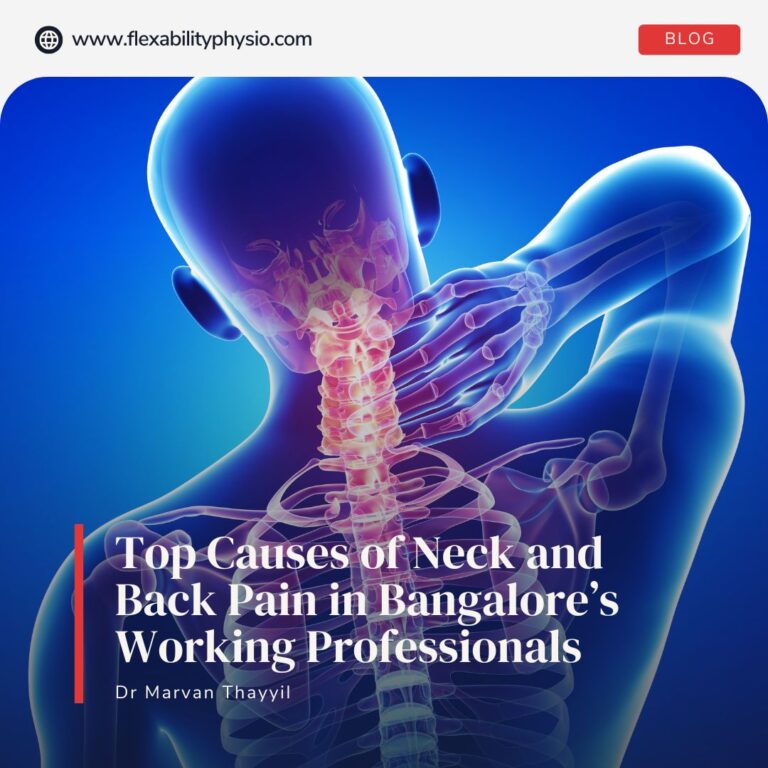
Bangalore’s fast-paced work culture has given rise to a silent epidemic — chronic neck and back pain among working professionals. Long hours at the desk, poor posture, and increasingly sedentary habits are no longer just passing discomforts; they are evolving into persistent, long-term health conditions that affect quality of life and productivity.
If you experience stiffness, tightness, or recurring pain, understanding the root cause is the first step toward lasting recovery.
Why Is Neck and Back Pain So Prevalent in Bangalore?
The modern work environment — particularly in tech-dense areas like Koramangala — demands extended screen time, minimal physical movement, and sustained high stress levels. These factors combine to place disproportionate load on the spine and surrounding musculature. Pain rarely occurs randomly; it accumulates gradually through specific, repeated habits.
Common Causes
1. Prolonged Sitting Without Movement Sitting for six to ten hours continuously places unrelenting pressure on the spine, especially the lumbar region. Sustained static postures weaken muscles, reduce blood circulation, and stress the intervertebral discs — collectively leading to chronic lower back pain and stiffness over time.
2. Poor Workstation Ergonomics Many professionals work with incorrectly adjusted chair heights, screens positioned below eye level, and no lumbar support. These conditions force the body into unnatural alignments, resulting in forward head posture, rounded shoulders, and persistent upper back strain.
3. Tech Neck from Excessive Mobile Use Laptops are not the only concern. Looking downward at a smartphone for extended periods significantly increases the load on the cervical spine. This pattern — commonly referred to as tech neck — leads to neck stiffness, shoulder tightness, and tension headaches.
4. Physical Inactivity A sedentary lifestyle progressively weakens the muscles responsible for spinal support. Without adequate strength and mobility, the body struggles to manage even routine daily stress, and minor muscular strain can escalate into chronic pain.
5. Stress and Muscular Tension Occupational stress does not remain confined to the mind — it manifests physically. Chronic work pressure frequently results in tightened neck and shoulder muscles, reduced range of motion, and heightened pain sensitivity, even in the absence of any structural injury.
6. Improper Lifting and Sudden Movements Lifting heavy objects with poor technique, or making abrupt twisting movements, can cause acute muscle strain, ligament injuries, or sudden-onset back pain. Exercise routines performed without proper form can similarly aggravate underlying issues.
7. Ignoring Early Warning Signs Mild stiffness, occasional discomfort, and subtle reductions in mobility are frequently dismissed until symptoms become severe. By the time professional care is sought, the condition is often more complex and requires a longer recovery period.
Why Rest Alone Is Not Sufficient
A common misconception is that rest is the primary remedy for neck and back pain. While temporary rest may offer short-term relief, it does not address the underlying causes — muscle weakness, dysfunctional movement patterns, and postural imbalances. Without correcting these root factors, the pain will continue to recur.
The Right Approach: Movement-Based Physiotherapy
Effective recovery from neck and back pain requires more than passive rest. A structured, movement-based physiotherapy programme focuses on restoring mobility, building functional strength, correcting posture, and preventing recurrence. The goal is not simply to reduce pain temporarily — it is to help you move better, sustainably.
When to Seek Professional Help
Do not wait for symptoms to become debilitating. Consult a physiotherapist if you experience any of the following:
- Pain persisting beyond five to seven days
- Difficulty sitting, working, or performing daily tasks comfortably
- Persistent stiffness in the neck or back
- Pain radiating into the arms or legs
Early intervention consistently leads to faster and more complete recovery.
Neck and back pain do not have to be an accepted part of professional life. With the right guidance and a personalised approach to movement and rehabilitation, long-term relief is entirely achievable.