Bangalore has cemented its position as India’s premier technology hub, drawing millions of skilled professionals into its rapidly expanding IT sector. While this growth has unlocked remarkable career opportunities, it has also given rise to a silent yet significant health concern — a sharp increase in musculoskeletal disorders, particularly chronic neck pain, shoulder dysfunction, and lower back pain, among office-based professionals.
At Flexability Physiotherapy Clinic, we regularly assess and treat IT professionals from across Koramangala, Jayanagar, HSR Layout, Electronic City, Whitefield, and neighboring tech corridors. The patterns we observe are consistent: modern work habits are placing unprecedented strain on the musculoskeletal system, and many professionals are seeking help only after symptoms have already become chronic.
The Physical Toll of Working in Bangalore’s IT Sector
The average IT professional in Bangalore spends between 8 to 12 hours daily in a seated position, engaged with screens. When combined with the city’s notoriously demanding commutes and an increasingly remote-first work culture, total sedentary time often extends well beyond what the body is designed to tolerate.
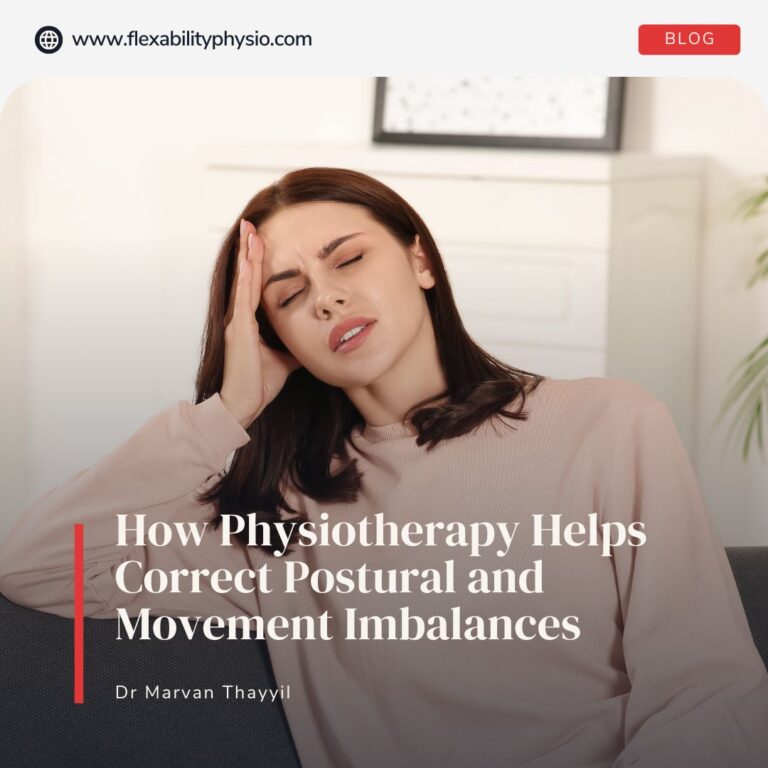
Common symptoms reported by professionals include cervical stiffness and pain, shoulder tightness and restricted range of motion, lumbar discomfort, posture-related headaches, wrist and forearm pain, and a progressive decline in overall flexibility and mobility. These symptoms typically develop gradually and, without timely intervention, tend to worsen considerably over time.
Understanding the Root Causes
Neck Pain: A Multifactorial Problem
Poor workstation ergonomics remain one of the primary contributors. Monitors positioned too low or too high compel the cervical spine into sustained, non-neutral postures, significantly increasing muscular load and joint stress.
Compounding this is the widespread phenomenon of forward head posture — a condition in which the head migrates anterior to the shoulders during prolonged screen use. Biomechanically, each inch of forward displacement multiplies the effective load on the cervical musculature, accelerating fatigue, stiffness, and the onset of pain.
Continuous, uninterrupted screen time further perpetuates muscular tension in the neck and upper back, gradually eroding mobility and comfort.
Shoulder Pain: The Consequence of Prolonged Static Postures
Extended periods of sitting invariably lead to protracted, anteriorly rounded shoulders — a postural adaptation that places excessive and sustained stress on the glenohumeral joint, rotator cuff musculature, and surrounding soft tissues. Suboptimal keyboard and mouse positioning exacerbates this by chronically overloading the shoulder stabilizers, promoting inflammation and discomfort. In the absence of regular movement, these muscles progressively weaken, creating a cycle of dysfunction that is difficult to reverse without professional guidance.
Lower Back Pain: A Growing Burden
Lower back pain ranks among the most prevalent musculoskeletal complaints seen in Bangalore’s office-working population. Prolonged sitting generates substantially greater compressive forces on the lumbar spine than standing, contributing over time to muscle deconditioning, joint stiffness, and intervertebral disc pathology.
A sedentary lifestyle simultaneously weakens the deep core musculature — the primary stabilizing system of the spine — further compounding vulnerability to injury. For many Bangalore professionals, this is further aggravated by long daily commutes spent seated in vehicles, adding hours of additional spinal loading to an already compromised system.
Warning Signs That Warrant Professional Assessment
Certain symptoms should not be dismissed or managed solely through self-care. Prompt physiotherapy evaluation is advisable if you are experiencing any of the following:
- Neck or back pain persisting beyond several days
- Shoulder discomfort that interferes with work or daily tasks
- Lower back pain that intensifies following prolonged sitting
- Recurrent posture-related headaches
- Tingling, numbness, or radiating pain into the arms or legs
- Noticeably reduced range of motion or flexibility
- Pain that disrupts sleep quality or daily function
Early clinical intervention consistently yields faster recovery, fewer complications, and more durable long-term outcomes.
How Physiotherapy Addresses These Conditions
Physiotherapy is grounded in identifying and treating the underlying causes of pain — not merely suppressing symptoms. At Flexability Physiotherapy Clinic, every patient undergoes a thorough clinical assessment evaluating posture, movement quality, workplace habits, and patterns of muscular imbalance. From this foundation, individualized treatment plans are developed, which may encompass manual therapy to reduce pain and restore mobility, structured postural correction programs, progressive strengthening protocols targeting core stability and spinal support, and comprehensive ergonomic guidance to optimize the work environment.
Practical Prevention Strategies
While professional treatment is essential once symptoms emerge, proactive habits can substantially reduce risk:
- Take structured movement breaks — rising and moving every 30 to 45 minutes interrupts prolonged static loading
- Optimize workstation ergonomics — monitor height, chair support, and peripheral placement all influence postural load significantly
- Maintain an active lifestyle — regular walking, stretching, and structured exercise counteract the effects of sedentary work
- Prioritize core conditioning — a strong, well-functioning core is foundational to spinal health and postural endurance
- Avoid sustained static positions — frequent positional variation reduces cumulative tissue stress throughout the workday
Conclusion
The physical demands of Bangalore’s high-performance IT industry are exacting a measurable toll on professional health. Prolonged sitting, poor ergonomics, excessive screen exposure, and extended commutes have collectively created a growing epidemic of neck, shoulder, and back pain — one that is frequently underestimated until it significantly impairs quality of life.
The encouraging reality is that these conditions are highly responsive to treatment. With the appropriate combination of evidence-based physiotherapy, ergonomic modification, and movement rehabilitation, most professionals can achieve meaningful, lasting relief.
At Flexability Physiotherapy Clinic, our clinical team is dedicated to helping Bangalore’s professionals move better, work more comfortably, and live without pain — through personalized, evidence-informed care