

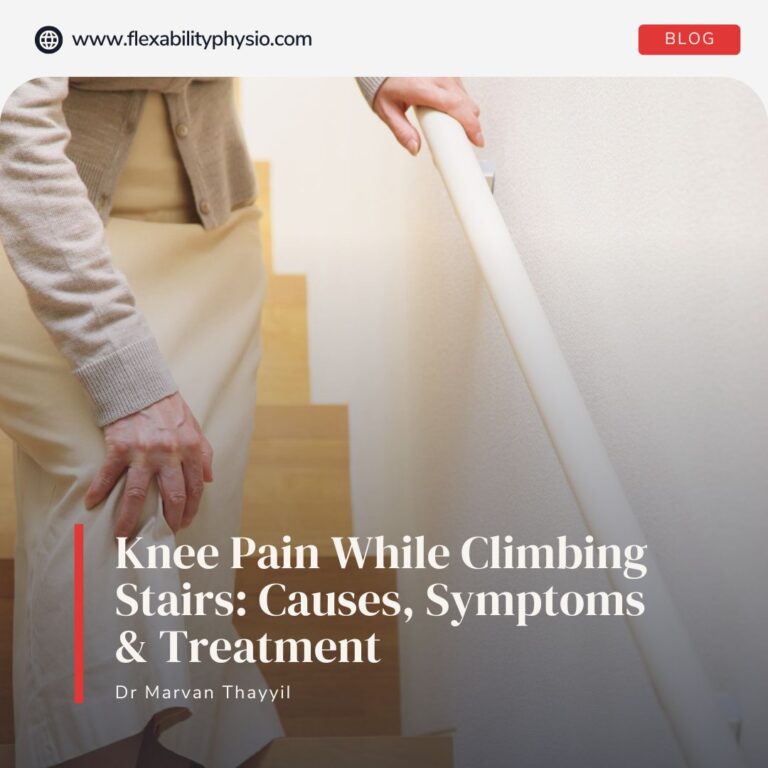
Climbing stairs, rising from a seated position, or walking uphill places considerably greater demand on the knee joint than level walking. While occasional discomfort may go unnoticed, persistent knee pain during these activities often signals an underlying condition that warrants professional attention.
At Flexability Physiotherapy, early assessment is key — patients who address symptoms promptly consistently achieve better outcomes than those who wait until pain begins limiting their daily function.
Why Stairs Place Greater Demand on the Knee
Stair climbing generates forces on the knee joint that can be three to four times greater than those experienced during normal walking. This elevated load frequently exposes structural or functional problems — involving muscles, tendons, cartilage, or joint surfaces — that remain asymptomatic during routine activities.
Common Causes of Knee Pain on Stairs
1. Patellofemoral Pain Syndrome (Runner’s Knee) A prevalent condition among young adults and active individuals, characterised by pain around or behind the kneecap, discomfort when ascending or descending stairs, aching after prolonged sitting, and a clicking or grinding sensation. Contributing factors include muscle imbalances, overuse, poor movement mechanics, and weakness in the hip and quadriceps musculature.
2. Knee Osteoarthritis Gradual deterioration of the articular cartilage results in joint stiffness — particularly noticeable in the morning — along with pain during weight-bearing activities, swelling, and a progressive reduction in range of motion. Although more prevalent in older adults, it can affect younger individuals following previous joint injury.
3. Patellar Tendinitis Inflammation of the patellar tendon presents as pain below the kneecap, localised tenderness on palpation, and symptoms that intensify with physical activity. It is particularly common among runners, jumping athletes, and those engaged in repetitive sport or exercise.
4. Meniscus Injury The meniscus serves as the knee’s primary shock absorber. A tear — whether from acute trauma or age-related degeneration — typically produces sharp pain, swelling, a locking or catching sensation, and difficulty achieving full flexion or extension.
5. Muscle Weakness and Altered Movement Patterns The knee joint itself is not always the source of the problem. Deficiencies in quadriceps, gluteal, hamstring, or core strength can significantly increase mechanical stress across the knee, producing pain during stair climbing and other functional tasks.
When to Seek a Professional Assessment
Prompt physiotherapy review is recommended when:
- Knee pain persists beyond several days without improvement
- Symptoms are progressively worsening
- Swelling, instability, or giving way is present
- The knee locks or catches during movement
- Daily activities are being modified or avoided due to pain
Early intervention consistently reduces the risk of acute issues progressing into chronic, harder-to-treat conditions.
How Physiotherapy Addresses Knee Pain
A thorough physiotherapy assessment at Flexability Physiotherapy goes beyond symptom management to identify the root cause of pain. Evaluation typically encompasses movement analysis, strength and mobility testing, functional assessment, and — where relevant — sport-specific evaluation.
Treatment is individualised and may include manual therapy, targeted strengthening and mobility programmes, gait and movement re-education, pain management strategies, and structured return-to-sport rehabilitation.
Practical Self-Management Strategies
While awaiting or alongside professional treatment, the following measures may help reduce symptom burden:
- Avoid abrupt increases in training volume or intensity
- Progressively strengthen the thigh, hip, and core musculature
- Maintain an appropriate body weight to reduce joint loading
- Wear supportive, well-fitting footwear
- Incorporate adequate warm-up prior to exercise
- Refrain from training through severe or worsening pain
These strategies can assist in managing symptoms but are not a substitute for clinical assessment and diagnosis.
A Note on Ignoring Knee Pain
Knee pain on stairs is not an inevitable inconvenience to be endured. Regardless of whether the underlying cause is muscular weakness, cartilage degeneration, ligamentous or meniscal injury, or joint dysfunction, timely and targeted treatment yields meaningfully better outcomes.
If you are experiencing persistent knee pain, the clinical team at Flexability Physiotherapy is available to conduct a comprehensive evaluation and develop a personalised management plan aligned with your specific needs and goals.