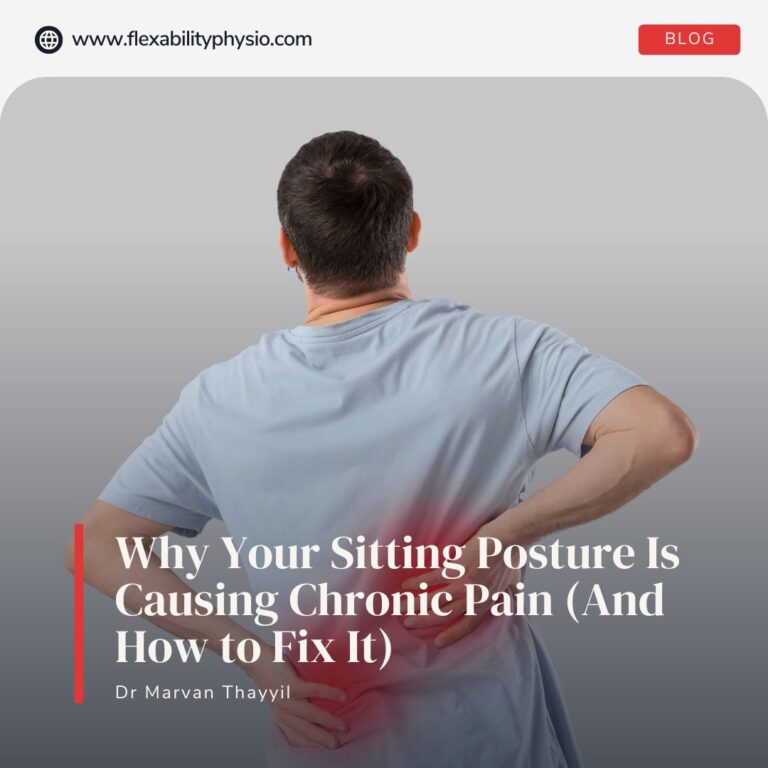
Modern lifestyles are increasingly defined by prolonged sedentary activity — working at desks, commuting in vehicles, and engaging with digital screens for hours on end. While this may appear inconsequential in the short term, poor sitting posture is now recognised as one of the most prevalent and underestimated contributors to chronic musculoskeletal pain. If you are experiencing persistent discomfort in your back, neck, or shoulders, your daily postural habits may be the primary driver.
The Hidden Impact of Poor Sitting Posture
When the body is held in biomechanically incorrect positions for extended durations, it is subjected to compressive and tensile forces it was not designed to sustain. The musculoskeletal system gradually adapts — but not without consequence. These effects accumulate quietly and often go unnoticed until pain has already become chronic.
Clinical consequences of sustained poor posture include increased compressive load on the intervertebral discs and spinal joints, progressive muscle imbalances where certain groups become overactive and tight while their antagonists weaken, reduced joint mobility particularly in the thoracic spine and hips, impaired circulation contributing to fatigue and delayed tissue recovery, and disruption of normal breathing mechanics due to thoracic compression.
What begins as occasional stiffness can, if left unaddressed, develop into persistent pain conditions that no longer resolve with rest alone.
Common Postural Errors
Most people are unaware of how profoundly their sitting habits contribute to pain. The most clinically significant errors include:
Thoracic Kyphosis (Rounded Upper Back) — Excessive forward rounding of the upper back places sustained stretch on posterior soft tissues while compressing anterior vertebral structures. This pattern is strongly associated with upper back pain, rib restrictions, and reduced respiratory capacity.
Forward Head Posture — For every inch the head migrates forward from its neutral position, the effective load on the neck increases dramatically. Extended screen use is the primary modern driver, contributing to cervicogenic headaches, neck pain, and nerve irritation.
Loss of Lumbar Lordosis — Sitting without adequate lower back support encourages flattening of the spine’s natural inward curve, increasing disc pressure at L4/L5 and L5/S1 — a leading contributor to lower back pain and disc pathology.
Habitual Leg Crossing — Asymmetrical pelvic positioning over prolonged periods creates rotational stress through the sacroiliac joint and hip complex, reinforcing left-to-right muscle imbalances over time.
Extended Static Positioning — Remaining in any fixed position for hours without movement leads to tissue ischaemia, joint compression, and progressive neuromuscular fatigue. The body requires regular positional variation to maintain optimal tissue health.
Why Chronic Pain Keeps Coming Back
A common frustration is that symptoms return despite repeated attempts at relief through rest, medication, or passive treatments. This occurs because symptom management does not alter the underlying biomechanical dysfunction generating the pain.
Chronic musculoskeletal pain is rarely localised to a single tissue. It is typically the downstream result of repeated mechanical stress applied to compromised structures over time. Without addressing the root cause — the postural and movement patterns driving that stress — the cycle will continue.
Additionally, chronic pain sensitises the nervous system progressively, meaning the relationship between structural dysfunction and symptom intensity becomes increasingly complex. Early, targeted intervention is therefore not only more effective but more efficient than waiting until pain becomes severe and entrenched.
The Role of Physiotherapy in Postural Correction
Effective physiotherapy for postural pain is a structured, evidence-based process that extends well beyond symptomatic relief. The goal is to identify the specific mechanical and neuromuscular contributors to a patient’s condition and address them through a targeted rehabilitation programme.
At Flexability, our clinical approach includes a comprehensive posture and movement assessment to identify the precise deficits driving symptoms, targeted soft tissue and joint treatment to restore tissue extensibility and joint mechanics, a progressive corrective exercise programme to correct muscle imbalances and rebuild postural endurance, personalised ergonomic and lifestyle guidance to reinforce rehabilitation gains throughout daily life, and patient education to support long-term self-management and independence.
The goal is not simply to reduce pain — it is to restore the structural balance, movement quality, and physical resilience needed for lasting recovery.
Evidence-Based Postural Improvements
Improving posture does not require complex interventions. The most effective changes are simple, sustainable, and progressive:
Ensure continuous lumbar support when seated, maintaining the natural curve of your lower back at all times. Position your screen at eye level to eliminate the downward head tilt that drives forward head posture. Keep both feet flat on the floor with hips and knees at approximately 90 degrees, distributing load symmetrically. Set a reminder to stand, move, and briefly stretch every 30 to 45 minutes — movement is a physiological necessity, not a luxury. Incorporate regular mobility and strengthening work targeting the thoracic spine, hip flexors, deep neck flexors, and scapular stabilisers. And remain mindful of postural habits outside the workplace — in vehicles, on sofas, and when using mobile devices.
Consistency is the governing principle. The body adapts to what it experiences repeatedly. Small corrections made habitually produce far greater long-term benefit than infrequent, intensive efforts.
When to Seek Professional Assessment
Early intervention consistently produces better outcomes and reduces the overall duration of treatment. You should consult a physiotherapist if you experience pain persisting beyond two to three weeks without improvement, symptoms that recur despite rest, progressive restriction of movement or joint stiffness, discomfort that worsens with sitting or interrupts sleep, radiating pain, numbness, or tingling into the limbs, or postural changes that are visually apparent such as a notably protruding head position or uneven shoulder height.
Minor postural dysfunction is far easier to resolve than chronic, entrenched pain. Do not wait for symptoms to worsen before seeking guidance.
Conclusion
Chronic pain is not accidental — it is the gradual consequence of repeated daily habits and the cumulative toll of hours spent in positions the body was not designed to sustain. The encouraging reality is that with the right clinical guidance and a committed corrective approach, this process is largely reversible.
Improving your posture is not simply about sitting straight. It is about restoring the muscular balance, joint mobility, and movement quality that correct posture depends upon — and integrating that understanding into every aspect of your daily life.
At Flexability, we provide evidence-based, individualised physiotherapy that addresses the root causes of postural pain, not just its symptoms. Whether you are experiencing early discomfort or managing long-standing chronic pain, we are here to support your recovery and help you achieve lasting, meaningful improvement.