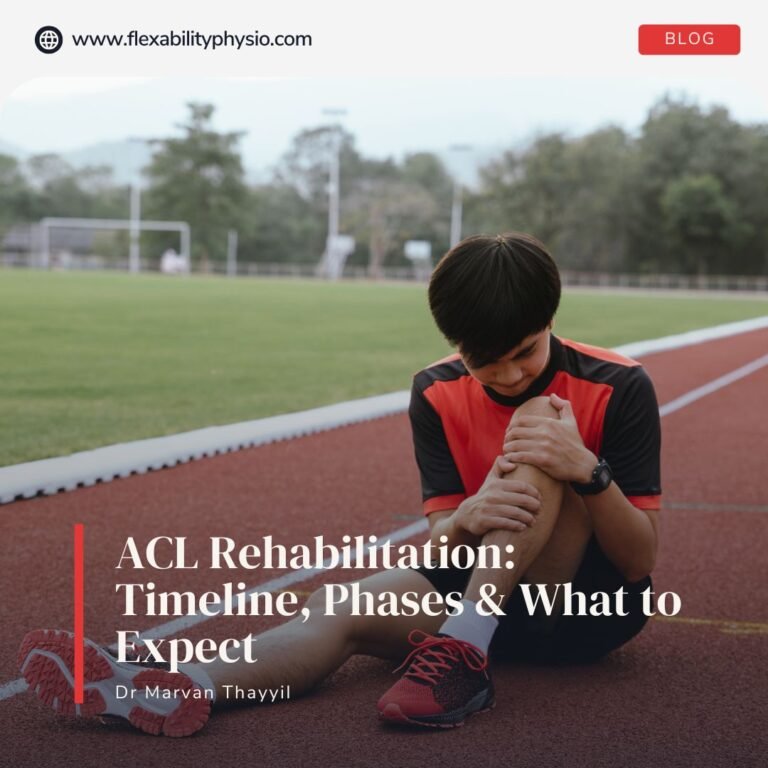
An Anterior Cruciate Ligament (ACL) injury is one of the most common knee injuries, especially among athletes and active individuals. Whether the injury occurred during sports, a sudden twist, or an accident, proper ACL rehabilitation is essential for restoring strength, stability, and confidence in your knee.
At Flexability Physiotherapy, we guide patients through a structured ACL rehabilitation program designed to help them recover safely and return to daily activities or sports.
This guide explains the ACL recovery timeline, rehabilitation phases, and what patients can expect during the process.
Understanding an ACL Injury
The ACL (Anterior Cruciate Ligament) is one of the major ligaments that stabilizes the knee joint. It connects the thigh bone (femur) to the shin bone (tibia) and helps control movements such as:
-
Sudden stops
-
Direction changes
-
Jumping and landing
ACL injuries commonly occur during:
-
Football
-
Basketball
-
Running
-
Sudden twisting movements
-
Sports with rapid direction changes
When the ligament tears, patients may experience:
-
Sudden knee pain
-
Swelling
-
Instability or “giving way”
-
Difficulty walking or bending the knee
Many patients require ACL reconstruction surgery, followed by a structured physiotherapy rehabilitation program.
ACL Rehabilitation Timeline
Recovery after an ACL injury typically takes 6 to 9 months, depending on the severity of the injury, surgical procedure, and the patient’s commitment to rehabilitation.
The recovery process is divided into several phases, each with specific goals.
Phase 1: Immediate Post-Injury / Post-Surgery (Week 0–2)
Goals
-
Reduce swelling and pain
-
Restore knee extension (straightening the knee)
-
Begin gentle movement
-
Activate the quadriceps muscles
Physiotherapy Focus
During this phase, physiotherapy focuses on gentle exercises such as:
-
Ankle pumps
-
Quadriceps activation exercises
-
Heel slides
-
Assisted knee bending
-
Controlled weight bearing
Patients may use crutches or a knee brace during this stage.
Early physiotherapy is important to prevent stiffness and improve circulation, which supports healing.
Phase 2: Early Rehabilitation (Weeks 2–6)
Goals
-
Improve knee range of motion
-
Gradually increase weight-bearing
-
Begin strengthening muscles around the knee
Physiotherapy Exercises
Typical exercises may include:
-
Straight leg raises
-
Mini squats
-
Step-ups
-
Stationary cycling
-
Balance training
During this phase, patients begin to regain control and stability in the knee joint.
Swelling should gradually reduce and walking should become easier.
Phase 3: Strength and Control (Weeks 6–12)
Goals
-
Build muscle strength
-
Improve knee stability
-
Restore normal movement patterns
At this stage, physiotherapy becomes more intensive.
Exercises may include:
-
Lunges
-
Leg press
-
Resistance training
-
Single-leg balance drills
-
Core stability exercises
Patients usually regain near full knee movement during this phase.
Strengthening the quadriceps, hamstrings, and glutes is crucial for protecting the knee.
Phase 4: Advanced Strength & Functional Training (3–6 Months)
Goals
-
Restore full strength
-
Improve agility and coordination
-
Prepare for sports or higher activity levels
Training may include:
-
Plyometric exercises
-
Running progression
-
Jump training
-
Sport-specific drills
This phase focuses on rebuilding confidence and dynamic knee stability.
Physiotherapists carefully monitor movement to prevent reinjury.
Phase 5: Return to Sport (6–9 Months)
Before returning to sports, patients must meet several criteria, including:
-
Full knee range of motion
-
Adequate strength in both legs
-
Good balance and coordination
-
No pain or swelling during activity
Functional tests may be performed to assess readiness for sports.
Returning too early increases the risk of re-injury, so physiotherapist guidance is essential.
Why Physiotherapy is Essential After ACL Injury
Proper rehabilitation significantly improves recovery outcomes.
Physiotherapy helps:
-
Restore knee stability
-
Prevent muscle weakness
-
Improve balance and coordination
-
Reduce risk of future injuries
-
Support safe return to sports
Skipping or rushing rehabilitation can lead to:
-
Chronic knee instability
-
Reduced athletic performance
-
Increased injury risk
When to Start ACL Physiotherapy
Physiotherapy often begins within days after surgery or injury.
Early rehabilitation helps maintain joint mobility and prevents muscle loss.
At Flexability Physiotherapy, treatment plans are customized based on:
-
Injury severity
-
Surgical procedure
-
Patient goals
-
Activity level
How Flexability Physiotherapy Helps ACL Recovery
Our rehabilitation programs include:
-
Evidence-based ACL rehabilitation protocols
-
Personalized physiotherapy sessions
-
Strength and mobility training
-
Sports-specific rehabilitation
-
Injury prevention strategies
Our goal is to help patients recover safely, regain confidence, and return to an active lifestyle.
Final Thoughts
ACL rehabilitation is a structured and progressive process that requires patience, dedication, and professional guidance.
With the right physiotherapy program, most patients can successfully return to their normal activities and sports.
If you are recovering from an ACL injury or surgery, working with a qualified physiotherapist can make a significant difference in your recovery journey.
Need ACL Rehabilitation Support?
Visit Flexability Physiotherapy for expert guidance and personalized rehabilitation programs designed to help you recover stronger and safer.